
1,4-dinitrobenzene
DangerGHS Pictograms
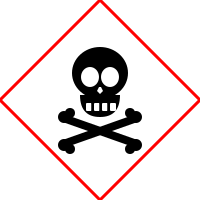
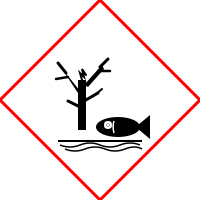

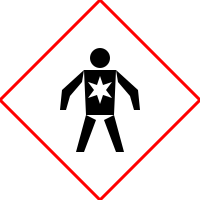
Hazard Classification
H300: Fatal if swallowed [Danger Acute toxicity, oral]; H310: Fatal in contact with skin [Danger Acute toxicity, dermal]; H330: Fatal if inhaled [Danger Acute toxicity, inhalation]; H373 **: May causes damage to organs through prolonged or repeated exposure [Warning Specific target organ toxicity, repeated exposure]; H400: Very toxic to aquatic life [Warning Hazardous to the aquatic environment, acute hazard]; H410: Very toxic to aquatic life with long lasting effects [Warning Hazardous to the aquatic environment, long-term hazard]; H300+H310+H330: Fatal if swallowed, in contact with skin or if inhaled [Danger Acute toxicity, oral; acute toxicity, dermal; acute toxicity, inhalation]; H319: Causes serious eye irritation [Warning Serious eye damage/eye irritation]; H373: May causes damage to organs through prolonged or repeated exposure [Warning Specific target organ toxicity, repeated exposure]; H370: Causes damage to organs [Danger Specific target organ toxicity, single exposure]; H372