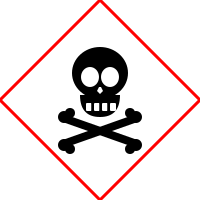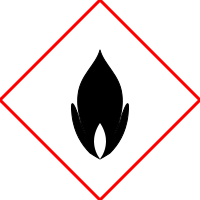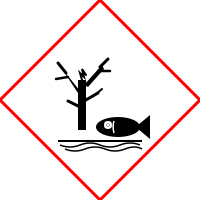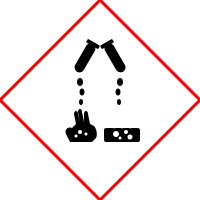
ChemicalScan ChemicalScan

1,4-dichlorobut-2-ene

Danger
EC Number
212-121-8
CAS Number
764-41-0
Formula
C4H6Cl2

Hazard Classification

Harmonised EU classification under CLP Regulation.

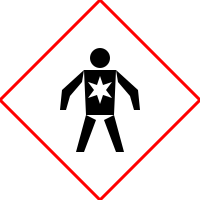
H301: Toxic if swallowed [Danger Acute toxicity, oral]; H311: Toxic in contact with skin [Danger Acute toxicity, dermal]; H314: Causes severe skin burns and eye damage [Danger Skin corrosion/irritation]; H330: Fatal if inhaled [Danger Acute toxicity, inhalation]; H350: May cause cancer [Danger Carcinogenicity]; H400: Very toxic to aquatic life [Warning Hazardous to the aquatic environment, acute hazard]; H410: Very toxic to aquatic life with long lasting effects [Warning Hazardous to the aquatic environment, long-term hazard]; H226: Flammable liquid and vapor [Warning Flammable liquids]; H301+H311: Toxic if swallowed or in contact with skin [Danger Acute toxicity, oral; acute toxicity, dermal]; H318: Causes serious eye damage [Danger Serious eye damage/eye irritation]; H336: May cause drowsiness or dizziness [Warning Specific target organ toxicity, single exposure; Narcotic effects]; H341: Suspected of causing genetic defects [Warning Germ cell mutagenicity]; H370: Causes damage to org

Hazard Statements

H226 Flammable liquid and vapour
H301 Toxic if swallowed
H311 Toxic in contact with skin
H330 Fatal if inhaled
H314 Causes severe skin burns and eye damage
H318 Causes serious eye damage
H340 May cause genetic defects
H341 Suspected of causing genetic defects
H350 May cause cancer
H361 Suspected of damaging fertility or the unborn child
H370 Causes damage to organs
H372 Causes damage to organs through prolonged or repeated exposure
H336 May cause drowsiness or dizziness
H400 Very toxic to aquatic life
H410 Very toxic to aquatic life with long lasting effects

Regulatory Status

SVHC (Candidate List)
No
Authorisation Required
No
Restricted
No
Is 1,4-dichlorobut-2-ene banned in the EU?
No specific ban or restriction. Check current ECHA records for the latest status.

External Resources

Data sourced from the European Chemicals Agency (ECHA). Information is provided for reference only. Always consult official ECHA records and relevant Safety Data Sheets for regulatory compliance.