
1,4-dibromobut-2-ene
DangerEC Number
230-219-9
CAS Number
6974-12-5
Formula
C4H6Br2
GHS Pictograms
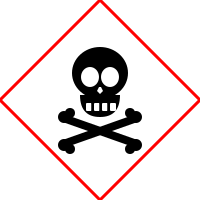
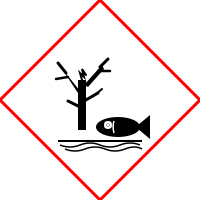
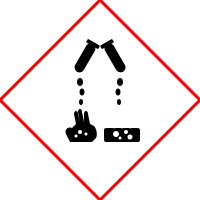
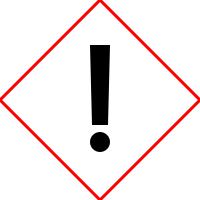
Hazard Classification
Harmonised EU classification under CLP Regulation.
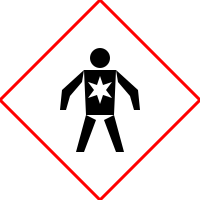
H301: Toxic if swallowed [Danger Acute toxicity, oral]; H311: Toxic in contact with skin [Danger Acute toxicity, dermal]; H314: Causes severe skin burns and eye damage [Danger Skin corrosion/irritation]; H317: May cause an allergic skin reaction [Warning Sensitization, Skin]; H318: Causes serious eye damage [Danger Serious eye damage/eye irritation]; H330: Fatal if inhaled [Danger Acute toxicity, inhalation]; H350: May cause cancer [Danger Carcinogenicity]; H411: Toxic to aquatic life with long lasting effects [Hazardous to the aquatic environment, long-term hazard]
Hazard Statements
Regulatory Status
SVHC (Candidate List)
No
Authorisation Required
No
Restricted
No
Is 1,4-dibromobut-2-ene banned in the EU?
No specific ban or restriction. Check current ECHA records for the latest status.
External Resources
Related Substances
1-[4-(dimethylamino)phenyl]-2-hydroxy-2-phenylethan-1-one
6317-85-7 Danger
(3-chloro-2-hydroxypropyl)dimethyloctadecylammonium chloride
3001-63-6 Danger
1,2,3-trifluoro-5-nitrobenzene
66684-58-0 Danger
1-(bromomethyl)-3,5-bis(trifluoromethyl)benzene
32247-96-4 Danger
1,1'-(methylenedi-p-phenylene)bismaleimide
13676-54-5 Danger
1-(4-acetylphenyl)-1H-pyrrole-2,5-dione
1082-85-5 Danger
Data sourced from the European Chemicals Agency (ECHA). Information is provided for reference only. Always consult official ECHA records and relevant Safety Data Sheets for regulatory compliance.