1,3-dichloroacetone
DangerEC Number
208-585-6
CAS Number
534-07-6
Formula
C3H4Cl2O
Tonnage Band
intermediate
GHS Pictograms
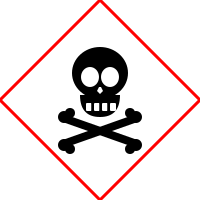
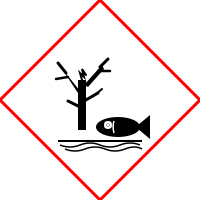
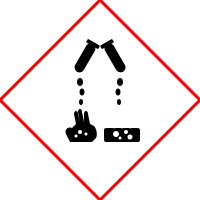
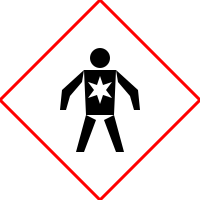
Hazard Classification
Harmonised EU classification under CLP Regulation.
H300: Fatal if swallowed [Danger Acute toxicity, oral]; H310: Fatal in contact with skin [Danger Acute toxicity, dermal]; H314: Causes severe skin burns and eye damage [Danger Skin corrosion/irritation]; H318: Causes serious eye damage [Danger Serious eye damage/eye irritation]; H330: Fatal if inhaled [Danger Acute toxicity, inhalation]; H341: Suspected of causing genetic defects [Warning Germ cell mutagenicity]; H400: Very toxic to aquatic life [Warning Hazardous to the aquatic environment, acute hazard]; H410: Very toxic to aquatic life with long lasting effects [Warning Hazardous to the aquatic environment, long-term hazard]
Hazard Statements
Regulatory Status
SVHC (Candidate List)
No
Authorisation Required
No
Restricted
No
Is 1,3-dichloroacetone banned in the EU?
No specific ban or restriction. Check current ECHA records for the latest status.
External Resources
Related Substances
1-(3-chlorophenyl)-4-(3-chloropropyl)piperazine
39577-43-0 Danger
1-(mercaptomethyl)cyclopropylacetic acid
162515-68-6 Danger
1,2,3,6-tetrahydro-4-methylphthalic anhydride
3425-89-6 Danger
1,2-difluorobenzene
367-11-3 Danger
1,3,5-triazine-2,4,6(1H,3H,5H)-trione, trisodium salt
3047-33-4 Danger
1,1,3,3-tetrabutyl-1,3-dichlorodistannoxane
10428-19-0 Danger
Data sourced from the European Chemicals Agency (ECHA). Information is provided for reference only. Always consult official ECHA records and relevant Safety Data Sheets for regulatory compliance.