
1,3-dibromopropane
DangerEC Number
203-690-3
CAS Number
109-64-8
Formula
C3H6Br2
Tonnage Band
intermediate
GHS Pictograms
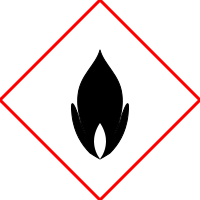
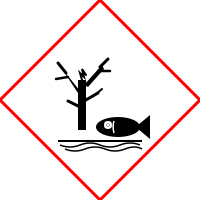

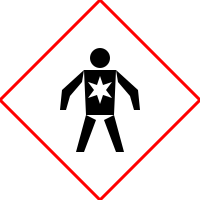
Hazard Classification
Harmonised EU classification under CLP Regulation.
H226: Flammable liquid and vapor [Warning Flammable liquids]; H302: Harmful if swallowed [Warning Acute toxicity, oral]; H315: Causes skin irritation [Warning Skin corrosion/irritation]; H319: Causes serious eye irritation [Warning Serious eye damage/eye irritation]; H411: Toxic to aquatic life with long lasting effects [Hazardous to the aquatic environment, long-term hazard]; H401: Toxic to aquatic life [Hazardous to the aquatic environment, acute hazard]; H370: Causes damage to organs [Danger Specific target organ toxicity, single exposure]; H373: May causes damage to organs through prolonged or repeated exposure [Warning Specific target organ toxicity, repeated exposure]
Hazard Statements
H226
Flammable liquid and vapour
H302
Harmful if swallowed
H315
Causes skin irritation
H319
Causes serious eye irritation
H370
Causes damage to organs
H373
May cause damage to organs through prolonged or repeated exposure
H401
Toxic to aquatic life
H411
Toxic to aquatic life with long lasting effects
Regulatory Status
SVHC (Candidate List)
No
Authorisation Required
No
Restricted
No
Is 1,3-dibromopropane banned in the EU?
No specific ban or restriction. Check current ECHA records for the latest status.
External Resources
Related Substances
1,4-dichlorobutan-2-one
16714-78-6 Danger
(1S)-3,7,7-trimethylbicyclo[4.1.0]hept-3-ene
498-15-7 Danger
1,1,3-trimethylcyclohexane
3073-66-3 Danger
1,2-dimethoxyethane
110-71-4 Danger
1-(3,5-dihydroxyphenyl)-2-[[2-(4-hydroxyphenyl)-1-methylethyl]amino]ethan-1-one hydrobromide
3371-33-3 Danger
1,2,4,5-tetramethylbenzene
95-93-2 Danger
Data sourced from the European Chemicals Agency (ECHA). Information is provided for reference only. Always consult official ECHA records and relevant Safety Data Sheets for regulatory compliance.